Oral Probiotics: Do They Work? What the Research Shows
Oral probiotics are live bacteria, usually in lozenges or chewable tablets that dissolve slowly in the mouth, meant to support a healthier balance of bacteria on the teeth, gums and tongue. They are sold to fix bad breath, calm gums and even prevent cavities. Some of that has research behind it, and some does not. This guide sorts it out goal by goal, using systematic reviews (studies that pool the results of many trials), and ends with a simple checklist for choosing a product and links to the oral probiotics we have reviewed.
The short answer
Oral probiotics can help a little, for some goals, for a while. The best evidence is for gum health: specific strains, mainly Lactobacillus reuteri, gave a small, short-term improvement when added to a professional deep cleaning. For bad breath, a few small trials found a modest short-term effect. For preventing cavities, the evidence is still insufficient. Results depend on the exact strain and dose, and no probiotic replaces brushing, flossing or the dentist.
What oral probiotics are
Probiotics are live bacteria that may benefit health when taken in adequate amounts. Oral probiotics, also called dental probiotics, use strains chosen for the mouth rather than the gut. They usually come as lozenges, chewable tablets or gum that dissolve slowly, so the bacteria stay in contact with the teeth, gums and tongue. A regular probiotic capsule is swallowed whole and is designed to reach the intestine, which is why it is not the same thing.
In the US, oral probiotics are sold as dietary supplements. That means the manufacturer, not the FDA, is responsible for showing they are safe and that the claims are accurate before they go on sale.
How they are supposed to work
Your mouth holds hundreds of species of bacteria, known as the oral microbiome. Problems such as cavities, gum inflammation and bad breath are linked to an imbalance, where harmful species take over. Oral probiotics are meant to tip the balance back by:
- Competing with harmful bacteria for space on teeth and gums and for food
- Producing substances that slow down harmful bacteria
- Calming the gum's inflammatory response
The catch: most probiotic bacteria do not settle in the mouth for good. In trials, effects usually faded within weeks after people stopped taking them.
Do oral probiotics work? Goal by goal
This table summarizes what systematic reviews found for each goal. We link each review so you can read it yourself.
| Goal and evidence | What the reviews found |
|---|---|
| Gum disease (periodontitis), as an add-on to professional deep cleaning Best supported |
Adding L. reuteri to scaling and root planing gave a small extra gain in gum attachment (about 0.4 mm) and less bleeding, at short term (J Clin Periodontol, 2016). A later review agreed, but noted the benefit was short-term (Eur Rev Med Pharmacol Sci, 2020). |
| Gum inflammation (gingivitis) Weak |
Ten placebo-controlled trials all reported some improvement, but the pooled numbers for L. reuteri were not statistically significant and the authors rated the evidence as weak (Aust Dent J, 2020). |
| Bad breath (halitosis) Limited |
Across three trials, people taking probiotics, mostly Lactobacillus strains, had better breath-odor scores judged by testers, but no change in measured sulfur gases, the compounds behind bad breath (Probiotics Antimicrob Proteins, 2019). |
| Cavities (tooth decay) Insufficient |
Probiotics often lowered the bacteria linked to cavities, but there is not enough evidence that they prevent cavities themselves (J Dent, 2016). A 2025 review saw the same pattern and called for longer trials (Frontiers in Oral Health, 2025). |
Two patterns repeat across all of these reviews: the trials are small and short, and results depend on the exact strain. A benefit found for one strain does not carry over to a product that uses a different one.
Oral probiotic strains with the most research
Lactobacillus reuteri
The most studied strain for gums. Most of the gum trials used a combination of two specific strains, L. reuteri DSM 17938 and ATCC PTA 5289, usually as lozenges taken twice a day.
Streptococcus salivarius K12
A strain that occurs naturally on the tongue. It was first tested for bad breath in a small preliminary study (J Appl Microbiol, 2006), and is common in breath-focused products.
Lactobacillus paracasei, L. rhamnosus and Bifidobacterium lactis
Studied mostly for lowering cavity-related bacteria such as Streptococcus mutans, with mixed results on actual cavities.
When a label lists a species without the strain code (the letters and numbers after the name), you cannot tell whether it is the same strain that was tested.
What about xylitol?
Many oral probiotic products also contain xylitol. It is not a probiotic, but a sweetener that the bacteria behind cavities cannot ferment. A Cochrane review found low-quality evidence that it may help prevent cavities, mostly at several grams a day. Xylitol is highly toxic to dogs, so keep any xylitol product out of their reach (FDA).
How to choose an oral probiotic: a 5-point checklist
- Named strains, with strain codes. This lets you match the product to research.
- An amount listed, usually in CFU (colony-forming units, the number of live bacteria) or billions of bacteria per dose.
- A form that stays in the mouth: a lozenge or chewable that dissolves slowly, not a capsule you swallow.
- A clear money-back guarantee, since results vary from person to person.
- Sold by the official seller, so the guarantee applies and the product is genuine.
And one rule above all: if you have bleeding gums, pain or a loose tooth, see a dentist first. A supplement can hide symptoms of a problem that needs treatment.
Oral probiotics we reviewed
Here is how the products we have reviewed so far do on the checklist above. Neither has a published clinical trial of the finished product.
| Checklist | ProDentim | ProvaDent |
|---|---|---|
| Named strains | Yes, 3 (incl. L. reuteri); a strain code only for B. lactis BL-04 | No, "4 strains" not named |
| Amount listed | 3.5 billion bacteria per tablet | No amounts |
| Stays in the mouth | Chewable tablet | Chewable tablet |
| Guarantee | 60 days | 60 days |
| Official seller only | Yes | Yes |
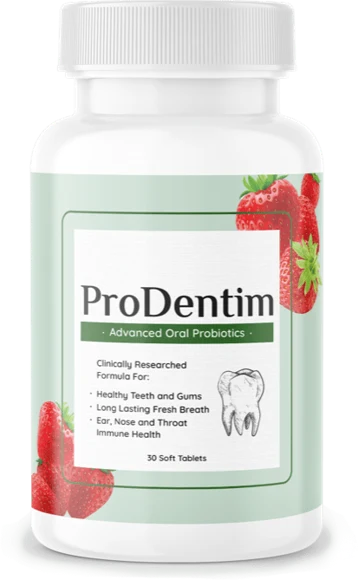 ProDentim Review
Probiotic-first chewable with L. reuteri: ingredients, research, prices and the guarantee.
 ProvaDent Review
Xylitol-first chewable with unnamed strains: what we could and could not verify.
ProDentim vs ProvaDent
Side by side: strains, xylitol, cost per day and the guarantee.
Are oral probiotics safe?
For healthy adults, probiotics are generally well tolerated; mild digestive changes are the most common effect. People with a weakened immune system, serious illness, pregnancy or who take prescription medication should talk to a doctor before starting any probiotic, and children should not take them without a pediatrician's approval. The NIH Office of Dietary Supplements keeps a neutral probiotics fact sheet.
What matters more than any probiotic
- Brush twice a day with a fluoride toothpaste
- Clean between your teeth once a day, with floss or interdental brushes
- Cut down on sugary drinks and snacks between meals
- See a dentist for regular checkups and cleanings
The American Dental Association's consumer site, MouthHealthy, is a good free reference.
Frequently asked questions
Do oral probiotics work?
For some uses, a little and for a short time. The best evidence is for specific strains, mainly L. reuteri, as an add-on to professional gum treatment. The effect on bad breath is modest, and there is not enough evidence for preventing cavities.
Are dental probiotics the same as regular probiotics?
No. Dental probiotics use strains chosen for the mouth and dissolve slowly so they stay in contact with teeth and gums. Regular probiotic capsules are swallowed and aimed at the gut.
How long do oral probiotics take to work?
The trials we looked at ran from about two weeks to three months. Where there were benefits, they were mostly short-term and faded after people stopped.
Can oral probiotics replace mouthwash or brushing?
No. They are, at best, a small extra on top of brushing, cleaning between the teeth and dental checkups.
Which oral probiotic is best?
There is no product with a published trial showing it is best. Use the checklist above: named strains with codes, a listed amount, a form that dissolves in the mouth, a guarantee and the official seller.
Bottom line
Oral probiotics are a promising but young idea. Specific strains have small, short-term benefits for gums and possibly breath; for cavities the jury is still out. If you want to try one, choose a product that tells you exactly what is inside, keep brushing and flossing, and treat it as an extra, not a fix. Start with our reviews of ProDentim and ProvaDent, or the side-by-side comparison.